
Licensed Prom Transport: What Parents Must Check Before Booking
Understand what licensed prom transport means and ensure your teenager's safety with vital checks before booking their ride.
Licensed prom transport means a for-hire vehicle, company, and driver that meets the commercial permits, passenger insurance, and safety inspection requirements set by the state or local agency governing that jurisdiction. This is not a private car, a rideshare account, or a friend with a van. The "licensed" part covers five distinct legal layers, and a gap in any one of them can leave your teenager uninsured and unprotected if something goes wrong on prom night.
Three things you can do right now, before you pay a deposit:
- Ask for the carrier or base number. Every licensed operator has one. If they hesitate or cannot produce it, stop there.
- Request a certificate of insurance showing commercial passenger liability coverage. A personal auto policy does not cover paying passengers.
- Confirm the driver holds a valid for-hire or chauffeur permit, not just a standard driver's license.
NHTSA's prom-season guidance flags elevated teen driving risk during prom season specifically and recommends professional transport as a concrete risk-reduction measure.
---
Key Takeaways
Licensed prom transport requires a verified carrier license, commercial passenger insurance, a permitted vehicle, and a credentialed driver — every layer must be confirmed before you pay a deposit.
| Point | Details |
|---|---|
| Verify the carrier number | Ask for it before booking and confirm it on the state PSC, DOT, or TLC website. |
| Confirm commercial insurance | Request a COI and call the insurer to verify the policy is active. |
| Inspect driver credentials | The driver must carry a valid for-hire or chauffeur permit with a visible expiration date. |
| Avoid cash-only deals | No written contract and a cash-only deposit are the clearest signs of an unlicensed operator. |
| APEX LIMO in Austin | Provides licensed chauffeurs, commercial insurance, and written prom contracts with full documentation on request. |
---
Useful U.S. regulator contacts and resources
When you contact any of these agencies, have the carrier name, vehicle plate number, and the date and location of the service ready.
- NHTSA prom-season safety tips: Nhtsa — federal consumer safety resource covering professional transport recommendations for prom season.
- Maryland Public Service Commission: Psc — carrier number lookup and prom/wedding limo guidance; model for PSC-style verification in other states.
- Georgia Department of Public Safety, Motor Carrier Compliance Division: Dps — searchable list of licensed limousine and party bus carriers; if a company is absent, it is not authorized.
- New York State DOT safety inspection data: Webapps — operator inspection performance records showing which carriers pass or fail mandated checks.
- Westchester County TLC prom fact sheet: Powertotheparent — local guidance on permit decals, driver permits, CDL thresholds, and prom safety contracts; useful template for what county-level TLC requirements look like.
- Your state DOT Motor Carrier division: Search "\[your state\] DOT motor carrier compliance" to find the carrier lookup tool and complaint form specific to your jurisdiction.
This article is general information, not a substitute for advice from a qualified lawyer. Consult a qualified legal professional about your own circumstances before acting on anything here.
Table of Contents
- What "licensed" actually covers in prom transport
- Who issues transport licenses and how you can verify them
- What can go wrong when you hire unlicensed prom transport
- Your pre-booking verification checklist
- How licensing affects cost, deposits, and booking timing
- Red flags to watch for and how to report unlicensed operators
- What a reputable licensed provider actually does differently
- A note on what actually keeps prom groups safe
- APEX LIMO offers licensed, verified prom transport in Austin
- Sources
What "licensed" actually covers in prom transport
The word "licensed" gets used loosely in limo marketing, so it helps to know exactly what it should mean. There are five components, and a legitimate provider can document all of them.
| Component | What it proves | What to request |
|---|---|---|
| Operator/carrier license or base number | The company is authorized to operate for hire in that state or municipality | Ask for the number; verify it on the regulator's website |
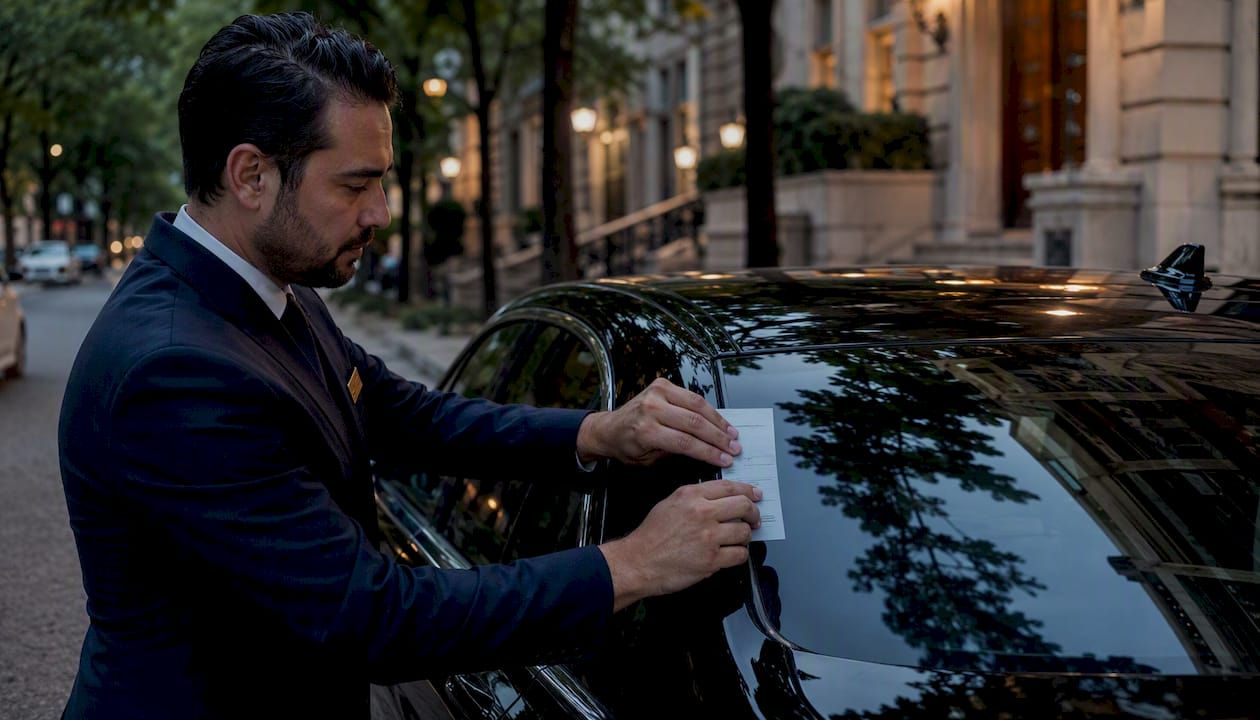
| Vehicle registration or permit decal | That specific vehicle is cleared for commercial passenger use | Look for the decal on the windshield or rear window |
| Commercial passenger liability insurance | Passengers are covered if there is an accident or injury | Request a certificate of insurance (COI) showing policy limits and certificate holder |
| Driver chauffeur or for-hire permit | The driver passed background screening and is licensed to carry paying passengers | Ask to see the permit card; check the expiration date printed in red |
| Mandated vehicle safety inspection | The vehicle passed a government-required mechanical check | Ask for the most recent inspection record or sticker |
The carrier license tells you the company is legally allowed to operate. The vehicle permit tells you that specific car or bus cleared inspection. The commercial insurance is the piece most parents overlook: personal auto policies almost universally exclude commercial passenger service, so an unlicensed operator's coverage is effectively zero the moment a student climbs in. The driver permit confirms the individual behind the wheel was screened, not just handed keys.
Westchester County's Taxi and Limousine Commission guidance requires permit decals on licensed for-hire vehicles, mandates that drivers carry valid chauffeur permits with the expiration date displayed, and notes that vehicles seating more than a certain passenger threshold require a CDL-licensed driver. Those specifics vary by state, but the five-component framework holds everywhere.
---
Who issues transport licenses and how you can verify them
Licensing authority depends on where the company operates, and sometimes on the vehicle type.
State Public Service Commission (PSC): In states like Maryland, the PSC regulates limousine and for-hire carriers, sets insurance minimums, requires rate filings, and maintains a searchable carrier list. Maryland PSC guidance advises customers to ask for the PSC carrier number and verify it directly with the Commission before paying anything.
State DOT or Motor Carrier division: Many states route commercial vehicle oversight through the Department of Transportation or a Motor Carrier Compliance Division. Georgia's MCCD publishes an online list of licensed limousine and party bus carriers; if a company does not appear on that list, it is not authorized to operate in the state.
City or county Taxi and Limousine Commission (TLC): Major metro areas often have their own licensing layer on top of the state system. New York City's TLC is the most well-known, but county-level TLCs exist in places like Westchester and operate their own permit and decal systems.
DMV: Some states handle for-hire vehicle registration through the Department of Motor Vehicles rather than a separate commission.
Here is a practical verification workflow to follow before you sign anything:
- 1.Ask the provider for their carrier or base number and the name of their regulating agency.
- 2.Go to that agency's website and search the carrier number. Most state PSC and DOT sites have a public lookup tool.
- 3.Request the certificate of insurance. Call the phone number on the COI to confirm the policy is active.
- 4.On the night of the event, check the vehicle's permit decal and ask the driver to show their for-hire permit with the expiration date visible.
---
What can go wrong when you hire unlicensed prom transport
The risks are not hypothetical. They fall into three categories: insurance, safety, and liability.
Insurance denial. Personal auto policies exclude commercial passenger service. If an unlicensed operator is involved in a crash, the insurer can and typically will deny the claim. That leaves injured students with no coverage from the operator's policy and a complicated legal path to any recovery.
Skipped safety inspections. Licensed operators must pass mandated annual mechanical checks. New York State DOT inspection data shows that vehicles failing safety inspections are legally barred from operation until they pass a re-inspection. Unlicensed operators skip this process entirely, meaning brake failures, tire problems, and mechanical defects go undetected.
Driver vetting gaps. A chauffeur or for-hire permit requires a background check. Without it, there is no formal screening between your teenager and whoever shows up to drive.
Schools and parents can also face complications when an unlicensed operator is connected to a school-affiliated event. Reporting mechanisms exist at the state level through the PSC, DOT, or local TLC, and using them matters both for accountability and for protecting other families.
---
Your pre-booking verification checklist
Before you sign a contract or hand over a deposit, collect and confirm each of these items.
Documents to request:
- Carrier or base number (verify it on the regulator's website before the call ends)
- Vehicle permit decal number or documentation
- Certificate of insurance showing commercial passenger liability coverage, policy limits, and the certificate holder name
- Driver's for-hire or chauffeur permit with photo and expiration date
- Written contract that specifies the no-alcohol policy, maximum passenger count, pickup and drop-off times, and cancellation terms
Questions to ask on the phone:
- "What is your carrier or base number, and which agency issued it?"
- "Can you email me a copy of your certificate of insurance today?"
- "Will the driver's for-hire permit be available for me to inspect at pickup?"
- "Does your contract include a no-alcohol clause and a stated passenger limit?"
Questions to ask at arrival:
- "Can I see the vehicle's permit decal?"
- "May I see your for-hire permit with the expiration date?"
- "What is the dispatch phone number I can call if there is a problem tonight?"
AAA recommends asking specifically about a written "Prom Promise" or safety contract, which sets ground rules for passengers and gives the driver a written basis to refuse unsafe behavior. A prom transportation contract is not just a formality. It is the document that protects both sides if the night goes sideways.
Pro Tip: *When you receive the certificate of insurance, do not just file it. Call the phone number listed for the insurer and confirm the policy number is active. A COI can be forged or outdated; a 90-second phone call closes that gap.*
---
How licensing affects cost, deposits, and booking timing
Licensed operators cost more than unlicensed ones. That is not a flaw in the system. Commercial passenger insurance, annual vehicle inspections, driver background checks, and in some states regulated rate filings all carry real costs that get passed to the customer. When a quote comes in dramatically lower than others, the most likely explanation is that one or more of those cost layers is missing.
Legitimate carriers typically require a deposit to hold a date, with the balance due before or on the day of service. Non-refundable cash-only deposits with no written contract are a red flag. A licensed company has a business address, a paper trail, and a regulator it answers to. Cash-only deals have none of those.
Booking timing matters more than most parents realize. Prom season concentrates demand into a narrow window, and licensed operators with clean inspection records and verified insurance fill up fast. Book at least 6–8 weeks out, and verify the carrier number and insurance certificate again in the week before the event. Licensing status can change; a company that was compliant in February may have had a permit lapse by April.
For group bookings, understanding deposit and contract terms early prevents last-minute scrambles when one student drops out and the group needs to renegotiate.
---
Red flags to watch for and how to report unlicensed operators
Warning signs before you book:
- The company cannot or will not provide a carrier or base number
- No physical business address, only a social media profile or a personal cell number
- Requests for a large cash-only deposit with no written contract
- Evasive answers when you ask about insurance or inspections
- No mention of a no-alcohol policy or passenger limit in any written communication
Warning signs on prom night:
- No visible permit decal on the vehicle
- Driver cannot produce a for-hire or chauffeur permit
- Vehicle appears in poor mechanical condition (warning lights, worn tires, damaged interior)
- Driver is not the person named in the contract
If you suspect an unlicensed operator, here is how to report it:
- 1.Record the vehicle's license plate number, the company name, and the date, time, and location of the incident.
- 2.Identify the appropriate regulator: state PSC, state DOT Motor Carrier division, county TLC, or local Department of Public Safety.
- 3.File a complaint online or by phone with that agency. Most state PSC and DOT sites have a dedicated complaint form.
- 4.If the booking was connected to a school event, notify the school administration so they can flag the company for future events.
If an unlicensed vehicle shows up on prom night, refuse to board. Call local authorities if the driver is unresponsive or aggressive. No ride is worth the risk of an uninsured, uninspected vehicle with an unscreened driver.
---
What a reputable licensed provider actually does differently
The difference between a compliant operator and a questionable one shows up before the car arrives.
A reputable licensed company provides the carrier or base number upfront, without being asked. They email the certificate of insurance within 24 hours of a request. Their vehicles carry visible permit decals, and their drivers show up with for-hire permits that have not expired. These are not extras. They are the baseline.
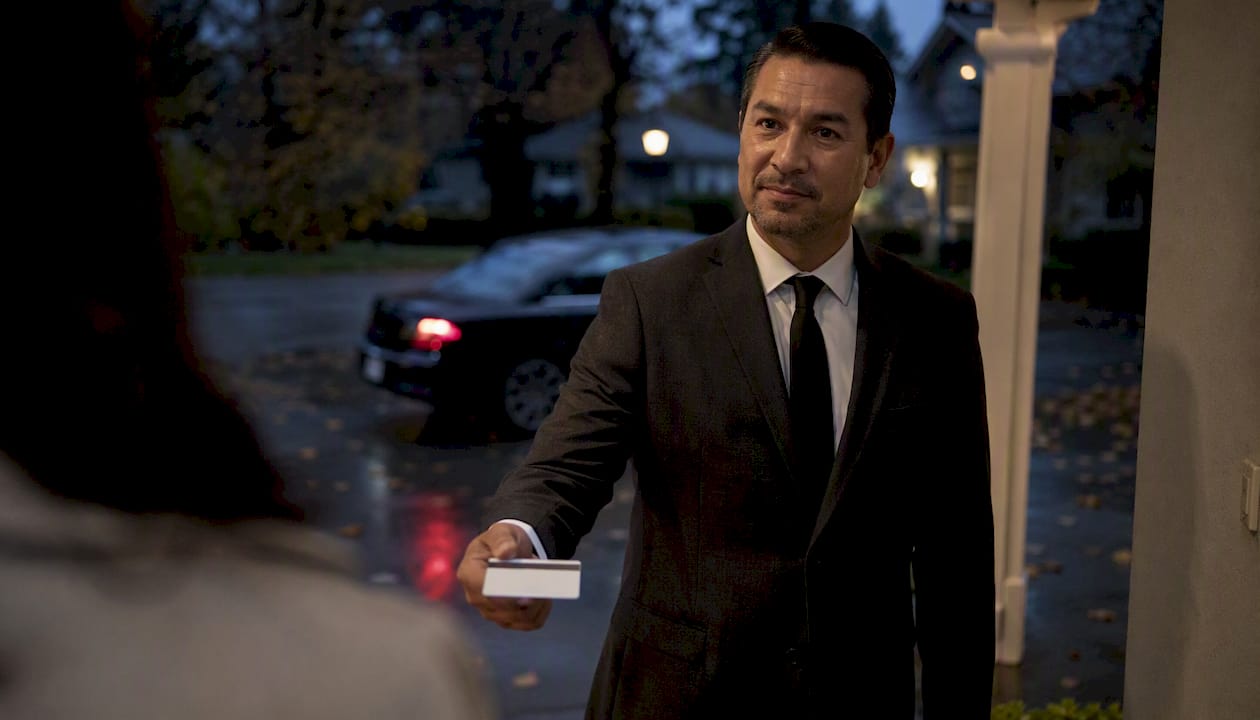
On the contract side, a legitimate provider gives you a written agreement that names the vehicle, the driver (or confirms a named dispatcher will confirm the driver assignment), the pickup and drop-off addresses, the passenger limit, the no-alcohol policy, and the cancellation and refund terms. AAA's guidance on prom limo rentals specifically recommends a "Prom Promise" or safety contract as a tool that protects families and gives drivers a written basis to enforce rules.
Reputable operators also conduct regular driver background checks and drug testing, not just at hire but on a recurring schedule. They maintain a named on-duty dispatcher you can reach by phone throughout the night. And they welcome an on-arrival vehicle inspection rather than deflecting it.
For a deeper look at what separates compliant providers from the rest, the signs of a reputable prom limo service come down to documentation, transparency, and a willingness to answer every question before you pay.
---
A note on what actually keeps prom groups safe
The paperwork matters, but the real protection comes from the culture a company builds around it. A zero-tolerance policy for underage drinking is not just a line in a contract. It is something the driver enforces in the moment, which means the company has to hire and train drivers who will actually do that, even when a group of teenagers pushes back.
Background checks and for-hire permits are the floor, not the ceiling. The operators who take prom safety seriously go further: they brief drivers on the specific route and event timing, they confirm dispatch contact is active throughout the night, and they treat the written safety agreement as a real document rather than a liability shield.
One practical tip worth passing on: when the vehicle arrives, ask the driver to show you the permit decal location and their for-hire permit before the students board. A driver who is comfortable with that request is a driver who has nothing to hide. Confirm the dispatch number is active by calling it once while you are standing there. Thirty seconds of verification at pickup is worth more than any amount of pre-booking research.

---
APEX LIMO offers licensed, verified prom transport in Austin
Parents booking prom transport in Austin deserve more than a promise. APEX LIMO operates with the full licensing stack: commercial passenger insurance, permitted vehicles, and chauffeur-screened drivers who carry valid for-hire credentials. Every booking comes with a written contract that includes a no-alcohol policy and stated passenger limits. Ask for the carrier number and certificate of insurance when you reach out, and you will have them before you pay a cent.

The fleet covers everything from stretch limos to party buses for larger groups, and every vehicle is maintained to pass the commercial inspection standards that unlicensed operators skip. Prom season books fast. Request a quote now and lock in a licensed, inspected vehicle before your date disappears.
---
Sources
- New York State Department of Transportation — Operator safety inspection performance data
- What to Know When Renting a Limo for Your Wedding or Prom (Maryland PSC)
- Motor Carrier Compliance Division encourages prom-goers to hire licensed limousine carriers (Georgia DPS)
- NHTSA — Driving tips for prom season
- 2026 Prom Night Fact Sheet (Westchester County Taxi & Limousine Commission guidance)
- Renting a Limo for Prom? Here’s What Parents (and Teens) Need to Know (AAA)
Recommended
- Why Prom Limo Companies Need Credentials: Parents' Checklist
- Signs of a Reputable Prom Limo Service: Parent's Guide
- Prom Transportation Contract: 2026 Parent and Student Guide
- Why Parents Should Vet Limo Companies for Prom Night
Explore Austin executive chauffeur services for your trip.
Our Services
Serving Austin and surrounding Central Texas communities. View all service areas →
Ready to Book?
Experience Austin in Luxury
Get a personalized quote for your Austin transportation needs — wedding, airport, corporate, or a night out.
Get a Free Quote