What Wedding Chauffeur Training Involves, Explained
Discover what wedding chauffeur training entails, from defensive driving to VIP etiquette and vehicle presentation, ensuring a flawless experience.
Wedding chauffeur training covers four things: defensive driving certified to a passenger-transport standard, VIP protocol and etiquette, event timing and multi-stop coordination, and vehicle presentation with pre-drive inspection. Companies that take it seriously align their programs with recognized benchmarks like National Limousine Association standards and course libraries from providers such as PAX, and a driven, wedding-ready company like APEX LIMO builds its chauffeur standards around exactly this framework.
If you're vetting a limo company for your wedding, this is the checklist worth asking about before you sign anything:
- Defensive driving certification specific to luxury passenger transport
- VIP protocol, etiquette, and hospitality training
- Event coordination skills: timing, multi-stop routing, venue logistics
- Vehicle presentation standards and pre-event inspection routines
- Background checks and documented certificate records you can actually request
Key Takeaways
Reliable wedding chauffeur training combines PAX-aligned certification, defensive driving credentials, event coordination skills, and documented verification through background checks and inspection logs.
| Point | Details |
|---|---|
| Certifications to confirm | Ask for named PAX course completions and a defensive-driving certificate specific to passenger transport. |
| Pre-event confirmation | Timelines should be locked in at least one week before the wedding, with a scheduling buffer built in. |
| Day-of green flags | Early arrival, spotless interior, calm coordination with the planner, and small comforts like water or tissues. |
| Documentation to request | Certificate names and dates, vehicle inspection logs, and ride-along mentorship records. |
| APEX LIMO's approach | Combines PAX-aligned training, defensive-driving verification, and inspection logs, available to review on request. |
Table of Contents
- What Does Wedding Chauffeur Training Involve, Category by Category?
- What Certifications and Standards Should You Look For?
- How Does Training Prepare Chauffeurs Before the Wedding Day?
- How Are Chauffeurs Trained for Safety and Emergencies?
- How Do Companies Verify Chauffeur Training Actually Happened?
- What Should You Ask a Limo Company About Chauffeur Training?
- What Does Good Chauffeur Service Actually Look Like on the Day?
- How Does APEX LIMO Apply This Training in Practice?
- Why Trained Chauffeurs Matter More Than Couples Realize
- How APEX LIMO Guarantees a Trained Chauffeur for Your Wedding
- Frequently Asked Questions
- Sources
What Does Wedding Chauffeur Training Involve, Category by Category?
Break it down and wedding chauffeur training falls into six skill categories, and a company that's only strong in one or two of them is a company that will eventually let you down on the wrong day.
Defensive driving comes first because it's the one area where a mistake has real consequences. Chauffeurs learn hazard awareness, following distance, and how to make quick decisions in traffic without jerking the vehicle or rattling passengers in the back.

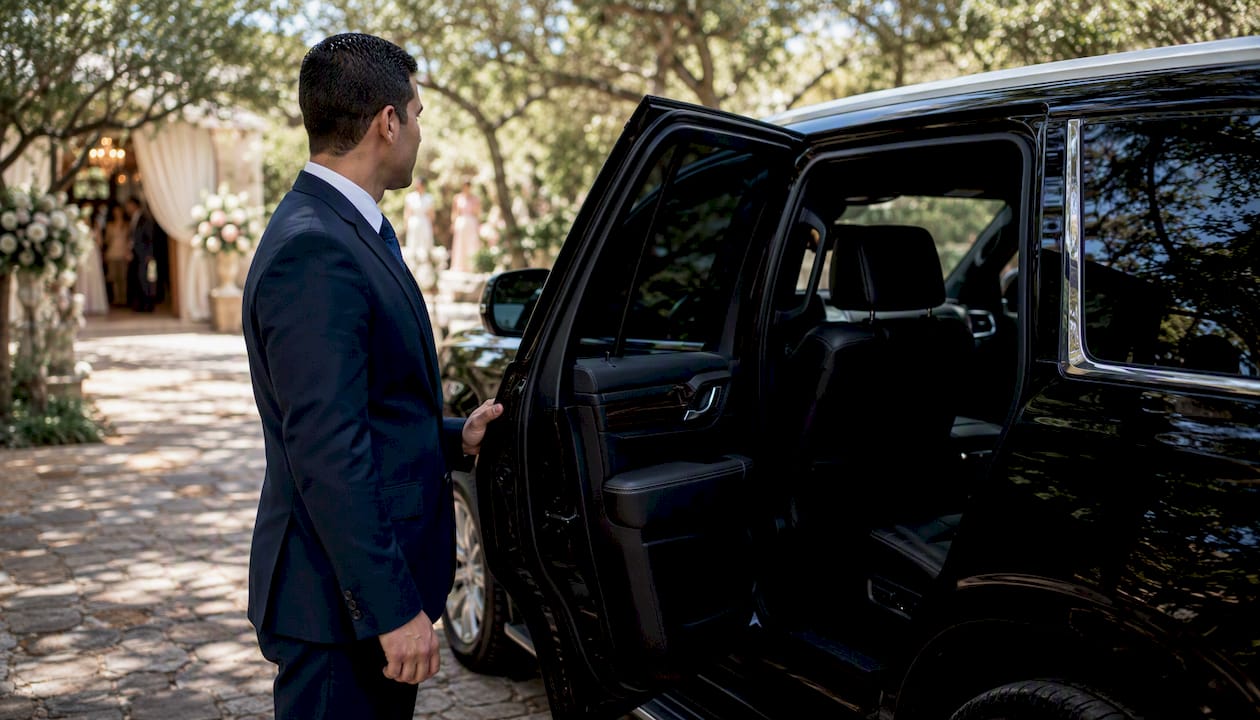
VIP protocol and etiquette is the layer most couples actually notice. This includes how a chauffeur opens a car door for a bride in a full gown, how they greet parents versus guests, and how much they say versus how much they simply do quietly.
Event coordination and multi-stop logistics means learning to run a timeline with a dozen moving pieces: church to reception, wedding party to a photo location, grandparents to a hotel.
Vehicle knowledge and presentation covers everything from knowing a stretch limo's turning radius to keeping the interior spotless between stops. Communication and guest handling trains chauffeurs to manage a nervous best man or a last-minute detour request without missing a beat. Emergency procedures round it out, covering what to do if a route closes or a passenger needs help.
> Training tends to run on three tracks at once: e-learning modules for the material a chauffeur can absorb on their own time, workshop sessions for group practice and role-play, and road practicums where a trainee actually drives a wedding-style route with a mentor in the passenger seat. A chauffeur who's only done the online module hasn't finished training. They've started it.
What Certifications and Standards Should You Look For?
The two names worth remembering are PAX and the National Limousine Association. PAX functions as the industry's course library, and its programs have been training the chauffeured services sector for more than a decade as the NLA's official training partner. Courses cover defensive driving, customer service, vehicle knowledge, and personal presentation, and operators frequently require chauffeurs to complete this exact set before they're allowed on a booking calendar.
On the safety side, the PAX Platinum Safety Program is a defensive-driving certification built specifically around hazard awareness and risk reduction for passenger transport, not generic commercial driving. That distinction matters more than it sounds like it should. A delivery driver's defensive-driving course teaches different priorities than one built for a car carrying six bridesmaids in $400 dresses.
| Credential or Standard | What It Verifies | Why It Matters for Weddings |
|---|---|---|
| PAX Course Completion | Defensive driving, customer service, vehicle knowledge, presentation | Baseline curriculum most reputable operators require |
| PAX Platinum Safety Program | Hazard awareness and risk reduction for passenger transport | Confirms defensive driving is wedding-specific, not generic |
| NLA Standards Alignment | Industry benchmark practices for chauffeured service | Signals the company operates above minimum legal requirements |
| Background Check Records | Employment screening and driving history | Baseline trust and safety verification |
A company aligned with National Limousine Association standards and PAX competencies is training chauffeurs in VIP protocol and hospitality as a formal curriculum item, not an afterthought picked up on the job.
Ask any provider a direct question: can they show you course completion records or certificate names? A company with nothing to produce, or that gets vague when you ask, is telling you something. A company that emails you a training summary within a day is telling you something else entirely.
How Does Training Prepare Chauffeurs Before the Wedding Day?
Most of what separates a smooth wedding transport experience from a stressful one happens before anyone gets in the car. Trained chauffeurs and the companies that employ them run a standard pre-event sequence:
- 1.Route planning using mapping tools to identify traffic patterns and alternate paths
- 2.Venue scouting for parking access, loading zones, and drop-off restrictions
- 3.Direct contact with the venue or wedding planner to confirm arrival protocols
- 4.Timeline confirmation with the couple or planner, ideally completed a week ahead
- 5.Building schedule buffers to absorb normal delays like late photos or a long ceremony
Best practice calls for confirming all timelines at least one week before the wedding, and experienced operators go further by building a 15 to 30 minute buffer into every leg of the day. Hair and makeup run long. Photos take longer than planned. A chauffeur who's only working off the exact printed schedule, with zero slack, is setting the day up to fail before it starts.
Pre-scouting itself has gotten more precise. Trained chauffeurs increasingly use tools like Google Street View or Waze to walk through a venue's approach before the wedding day, catching problems like a blocked loading dock or a narrow turn a stretch limo can't make.

Pro Tip: *Ask your chauffeur company directly whether they've physically confirmed parking and arrival access at each venue, not just mapped it online. A satellite view doesn't show you the construction fence that went up last Tuesday.*
How Are Chauffeurs Trained for Safety and Emergencies?
Safety training goes well past "drive carefully." Defensive driving instruction for luxury transport specifically covers hazard awareness, spacing and speed control around other vehicles, and decision-making under the kind of pressure that shows up when a wedding procession is running late and traffic isn't cooperating.
Beyond driving mechanics, chauffeurs are trained on a set of contingency procedures:
- What to do if the vehicle breaks down mid-route
- How to respond to a medical incident involving a passenger
- Incident reporting steps, including documentation for insurance purposes
- Who to contact first: dispatch, the planner, or the client, in that order
> Picture a road closure on the way to the reception venue, discovered ten minutes before departure. A chauffeur trained in defensive driving and contingency planning doesn't panic or improvise blind. They already have a mapped alternate route from the pre-event scouting phase, they alert dispatch immediately, and they communicate the delay to the planner before the couple even notices anything's wrong.
That's the entire point of formal safety and emergency training: the crisis gets handled quietly, off camera, while the wedding day keeps moving.
How Do Companies Verify Chauffeur Training Actually Happened?
Training on paper means nothing if a company can't back it up. The verification layer is where reputable operators separate themselves, and it typically includes background checks, drug screening, and validated certificates on file for every chauffeur.
Beyond hiring checks, quality companies run ongoing systems: scheduled vehicle inspections, standardized service checklists, and structured feedback after every event. Driver checklists and post-event feedback loops help operators catch small problems before they become patterns, and short client surveys after the wedding feed directly back into refresher training.
| Verification Step | What It Confirms |
|---|---|
| Background check and drug screening | Baseline employability and safety history |
| Certificate validation | Confirms training claims match actual course completion |
| Ride-along mentorship sign-off | New chauffeur has driven wedding-style routes under supervision |
| Vehicle inspection log | Confirms maintenance and cleanliness standards are current |
| Post-event feedback review | Confirms service quality is monitored, not assumed |
Operators increasingly manage this with dispatch software. Platforms like LiMO organize bookings in real time, map itineraries, and track schedules to prevent the kind of double-booking or scheduling overlap that turns into a chauffeur arriving late for your ceremony because he was still finishing another job across town.
When you're evaluating a company, ask for specifics: certificate names and dates, a copy of a defensive-driving certification, the date of the vehicle's last maintenance check, or a sample record showing a new chauffeur completed ride-along mentorship before working solo events.
What Should You Ask a Limo Company About Chauffeur Training?
Keep your questions short, specific, and easy for a provider to answer with a document rather than a vague reassurance:
- "Which PAX courses have your wedding chauffeurs completed, and can you share the completion dates?"
- "What defensive-driving certification does each chauffeur hold, and is it wedding or luxury-transport specific?"
- "Do chauffeurs complete a ride-along or mentorship period before driving weddings solo?"
- "How often are vehicles inspected, and can I see your last maintenance log?"
- "What's your written protocol for handling a delayed timeline or a road closure?"
A short email or phone script works well: "Before we book, could you send a brief training summary for the chauffeur assigned to our date, including certification names and your vehicle inspection schedule?" Most established operators can answer that in one reply.
> A company that names its PAX course completions, points to a written service protocol, and offers a sample ride-along record is showing you real proof. A company that only says "our drivers are all professionals" without specifics is giving you a marketing line, not an answer.
Weak signals: vague reassurances, no certificate names, reluctance to discuss vehicle maintenance. Strong signals: named courses, dated records, and a written protocol they're willing to show you before you've even paid a deposit.
What Does Good Chauffeur Service Actually Look Like on the Day?
Training shows up in small, observable details, and so does its absence. Here's the practical comparison:
| Green Flags | Red Flags |
|---|---|
| Arrives 15 minutes early | Arrives right at pickup time or late |
| Vehicle interior spotless, no odors | Visible dirt, lingering smells, cluttered interior |
| Calm, discreet coordination with the planner | Visibly stressed or unaware of the timeline |
| Cabin pre-set to a comfortable temperature | Passengers adjusting climate themselves after boarding |
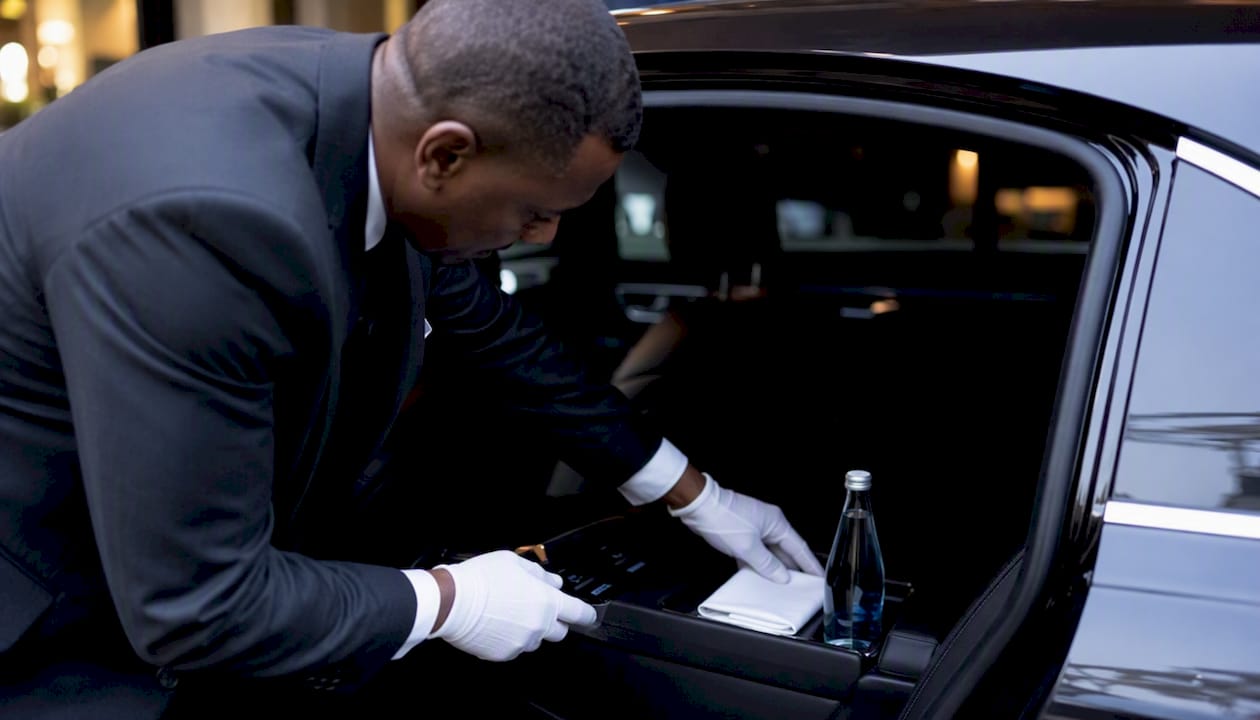
| Water and tissues quietly available | No small comforts offered or present |
| Seat belts accessible, gown-friendly door assistance | Fumbling with doors or ignoring dress logistics |
Small cues carry weight because they're proof of preparation, not luck. A chauffeur's professional presentation, interior readiness, and discreet coordination with the planner reflect exactly the habits taught in formal training programs, not something a driver improvises.
If you spot a red flag early, most are correctable on the spot: ask the planner or day-of coordinator to relay a request directly to dispatch rather than confronting the chauffeur yourself. A well-run company would rather hear about a problem at 9 a.m. than read about it in a review that night.
How Does APEX LIMO Apply This Training in Practice?
APEX LIMO builds its wedding chauffeur program around the same framework covered above: PAX-aligned course modules, defensive-driving verification, structured ride-along mentorship for new chauffeurs, and scheduled vehicle inspections before every event goes out the door.
The process runs in three phases. Pre-event, a chauffeur confirms the venue, parking access, and timeline directly with the couple's planner, then builds in a buffer for the inevitable delays. Day-of, the chauffeur arrives early, the vehicle has already passed inspection, and coordination with the planner happens quietly in the background rather than in front of guests. Post-event, feedback gets collected and reviewed, feeding directly into refresher training for the whole chauffeur team.
>
Why Trained Chauffeurs Matter More Than Couples Realize
Couples tend to think about their chauffeur as a logistics detail, something to check off between the florist and the DJ. That's a mistake, and it's the wrong way to weigh what you're actually paying for.
A trained chauffeur is the difference between a wedding day that flows and one where you're mentally tracking whether the limo is going to show up on time while you're supposed to be getting your hair done. Timeliness, dignity in how a gown gets handled at a car door, and photos that aren't interrupted by a confused driver asking where to park, these aren't luxuries. They're the direct output of the safety, etiquette, and coordination training covered earlier in this piece.
On cost versus value: a trained chauffeur costs more than an untrained one, and that premium is almost always worth paying on the one day where there's no reshoot if something goes wrong. But training alone isn't the full answer. It only holds up when a company backs it with the quality-control layer, background checks, inspection logs, feedback loops, discussed above. A well-trained chauffeur at a company with no verification system is one bad day away from being an unreliable one.
How APEX LIMO Guarantees a Trained Chauffeur for Your Wedding
Most limo companies will tell you their drivers are "professional." APEX LIMO can actually show you what that means: PAX-aligned course completion, documented defensive-driving certification, ride-along mentorship for every new chauffeur, and vehicle inspection logs you can ask to see before you book. That's the concrete difference between taking a company's word for it and getting proof.

If you want reassurance beyond a sales pitch, ask directly. APEX LIMO can share a sample training checklist or certification summary for the chauffeur assigned to your date, along with details on available wedding vehicle options and why a dedicated wedding chauffeur is worth the investment. Get a quote and check availability for your wedding date to see exactly what's included.
Frequently Asked Questions
What does wedding chauffeur training involve, in the shortest possible terms?It involves defensive driving certification, VIP etiquette and hospitality training, event timing and coordination skills, and vehicle presentation standards, usually verified through background checks and documented certificates.
Are wedding chauffeurs required to hold specific certifications?There's no single national license just for wedding chauffeurs, but reputable operators require course completion through providers like PAX and often align with National Limousine Association standards.
How long before the wedding should transportation details be confirmed?Best practice calls for confirming the full timeline with the chauffeur company at least one week before the wedding, giving both sides time to catch scheduling problems.
What's a reasonable question to ask about a chauffeur's driving record?Ask whether the chauffeur holds a defensive-driving certification specific to passenger transport, such as the PAX Platinum Safety Program, and request the certification date.
What should I do if my chauffeur arrives late or the vehicle looks unkempt?Flag it immediately to the planner or dispatch rather than waiting. A well-run company with proper quality-control systems can usually correct or escalate the issue before it affects your timeline.
Sources
- National Limousine Association
- The Knot
- PAX Training — Limousine industry courses
- The Chauffeur’s Checklist for Surviving Wedding Season — Pro Driver Point
Any provider worth hiring should be able to match these sources with real, dated documentation, and APEX LIMO's own proof points are available on request through its contact page.
Recommended
- Why Hire a Wedding Day Chauffeur for Your Big Day
- Wedding Transportation Gratuity Explained for Couples
- Wedding Transport Seating Arrangements: 2026 Guide
- What Is a Wedding Transportation Coordinator?
Plan the Complete Journey
For the complete planning framework, see our Austin wedding limo guide.
Explore wedding transportation for your trip.
Our Services
Serving Austin and surrounding Central Texas communities. View all service areas →
Ready to Book?
Experience Austin in Luxury
Get a personalized quote for your Austin transportation needs — wedding, airport, corporate, or a night out.
Get a Free Quote